For the complete documentation index, see llms.txt. This page is also available as Markdown.

Docker Extensions

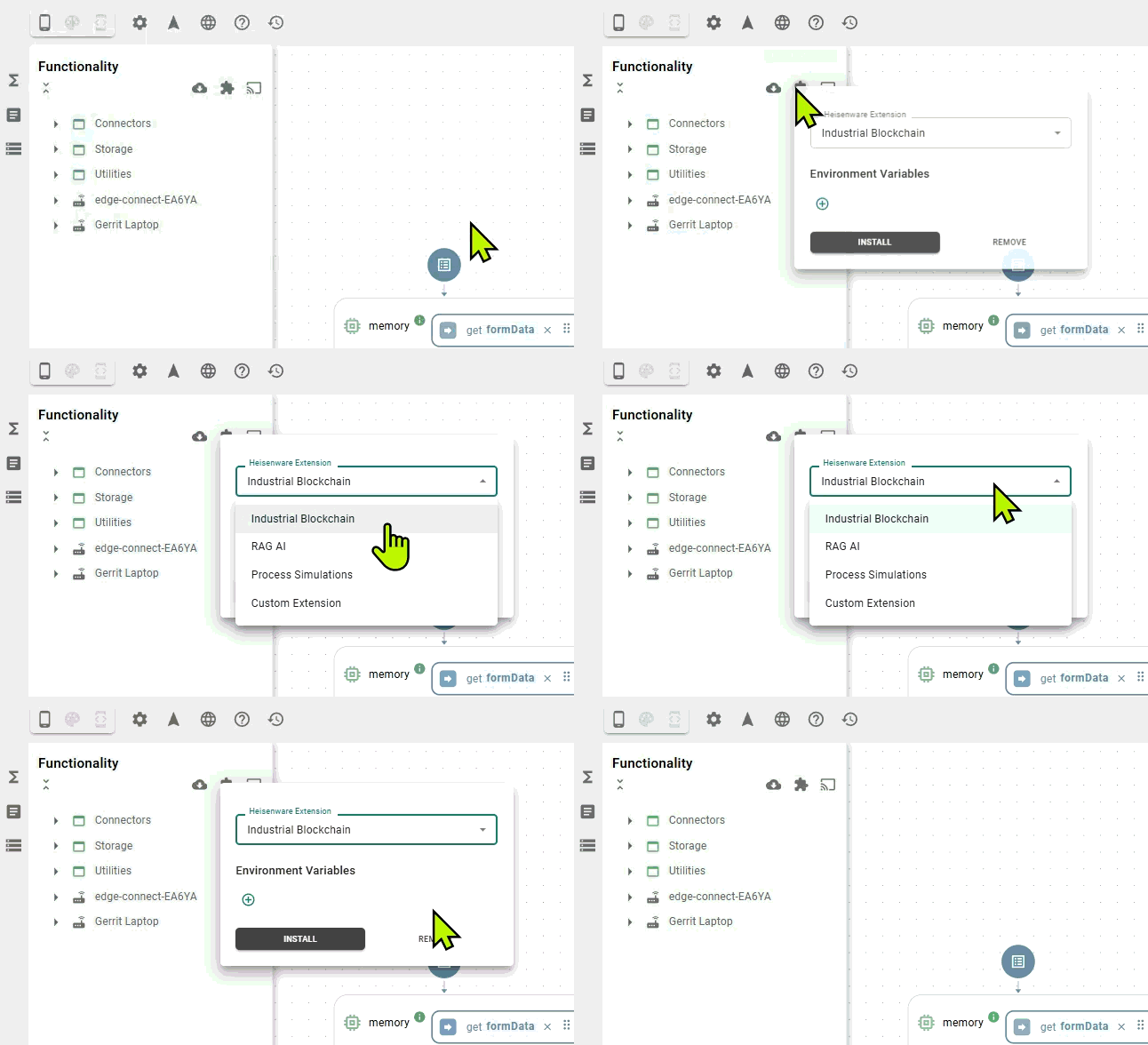
Docker Extensions expand platform capabilities using Docker container technology. A Docker Extension is a standard Docker image that the platform loads, executes, and exposes as functions inside the App Builder.

Docker Extensions versus extension nodes

Docker Extensions add completely new function classes to the platform. Do not confuse them with extension nodes (modifiers, filters, recorders, and error handlers), which are the small nodes that attach directly to a function output on the canvas.

The platform supports two categories of Docker Extensions:

  1. Official extensions: Pre-built, managed modules maintained by Heisenware.

  2. Custom Extensions: User-created Docker images containing custom algorithms, drivers, or proprietary logic.

Official extensions

Pre-built modules add advanced capabilities to the platform without manual coding:

Extension
Description

Provides immutable data logging and audit trails.

Enables Retrieval-Augmented Generation for context-aware AI assistants.

Simulates utilities consumption, CNC machine telemetry, and silo fill levels.

Manages IoT sensor data via the standardized OGC SensorThings specification.

Once installed, these extensions run alongside standard platform services, appearing as selectable blocks in the Function Explorer.

Adding extensions to the App Builder

Custom Extensions

Build a custom Docker Extension by wrapping code inside a Code Adapter and loading the image into the platform or running it on your infrastructure. See the Custom Extensions guide for deployment steps.

Last updated

Was this helpful?